Felicia's Take
A BAY AREA GEM
In celebration of Black History Month, Sports Business Simulations acknowledges those who have contributed to the world of sports.
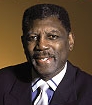
A BAY AREA GEM
Golden State Warriors Vice President and General Manager Alvin Attles helped lead his 1974-1975 Cinderella team to their one and only championship.
By Felicia D. McDaniel
Sports Business Simulations
When you mention the history of sports in Oakland you think of the success of the Raiders and the Oakland Athletics. When you mention the Golden State Warriors and the playoffs, Don Nelson and the Run-TMC era come to mind. However, it was under the tenure of Alvin "Al" Attles, that the Warriors celebrated their greatest achievement, winning an NBA Championship 30-years ago.
The second African-American to win an NBA Championship, (Bill Russell was the first) Al Attles originally didn't want to be head coach of the Golden State Warriors. Already a player on the team, then owner Frank Mieuli told him there was going to be changes made and he was being considered for the head coaching position. Attles declined, stating he felt taking over the team wouldn't make a difference in their already losing season.
"I grudgingly took the position," said Attles, "I finished coaching the remainder of the 1969-1970 season and we finished with the exact same wins as the prior year." That may have felt like a hopeless case for some but Attles noticed the effort his former teammates and current players gave. "They worked just as hard with the remaining 30 games when I took over. After that, I said I would come back for one year."
A Newark, New Jersey native, Attles began playing organized ball in middle school. Although he enjoyed playing various sports he credits basketball for giving him the opportunity to get an education. "It was a godsend for me," he said.
That godsend earned him a scholarship for basketball at the historical black college, North Carolina A&T where he earned his BA in Physical Education and History in 1960.
As fate would have it, he avoided being drafted by the NBA and played guard for the Baltimore Bullets of the Eastern League, a minor league team that drafted him out of college. A feared defender on the court, he earned $100 per game for a three-day weekend of play.
He later headed to the Philadelphia Warriors camp in Hershey, Pennsylvania and was offered an original contract of $5500 for 79 games after 20 pre-season games in 1960. In his 11-year playing career, the most he would earn for his hard-nosed style of play would be $100,000; pocket change for today's players.
"You're worth what someone is willing to pay you," said the 44-year veteran who has the second longest streak with the same organization behind the Boston Celtics owner Red Auerbach.
Attles took the Warriors to the playoffs his first three years as head coach and the best was yet to come. Heading into the 1974-1975 NBA Finals as the underdog, many expected them to be swept by the highly touted Washington Bullets.
But it would be Golden State doing the sweeping of the former Washington Bullets 4-0 in the 1974-1975 NBA Championship game. The sweep was a derivative of the gritty play of Rick Barry, the defensive power of Clifford Ray and the smooth shooting of Keith "Jamaal" (Silk) Wilkes.
"It was a huge step. You can't win unless you're in it and you can't win the championship unless you're in the playoffs," Attles says.
Humble and sincere, he credits his coaches for his success. "You don't go into a coaching situation with your eyes closed and no expectations. I had no idea what I was doing, Frank Mieuli saw something I didn't see."
Former player Rick Barry sees it differently and credits Attles for a hard work ethic. "He coached me when it mattered and he always came with the right kind of attitude, we were playing hard all the time," says the hall-of-famer, also a teammate of Attles. "Al did something coaches are reluctant to do today and that's use his bench."
An innovator of X's and O's, Attles did what a lot of coaches are skeptical of doing today, playing his rookies. "It was a fantasy year, the biggest upset in major sports history. People expected us to be losing, it was pretty special," Barry fondly recalls.
Unfazed about the lack of notoriety his team received then and today, Attles notes, "There just wasn't publicity in those days and the other two teams had been here longer.We were just a nice team that nobody expected anything from."
He continues, "There were no illusions, I simply let them know, if you work towards a common goal and approach it the same way, you will have success," he said in his velvety trademark voice.
Attles coached for 13 years in the NBA, retiring after the 1982-1983 season. He guided the Warriors to six playoffs, two division titles and one NBA championship. As Vice President and GM, he offers his consulting expertise to the Warriors and can often be seen meeting and greeting fans at games.
The Voice of The Giants
San Francisco Giants Public Address Announcer Renel Brooks-Moon breaks down color and gender lines making history in the process.
By: Felicia D. McDaniel
Sports Business Simulations
If you listen to her show in the mornings, you know there is no secret that Renel Brooks-Moon is a die-hard Raiders fan. Although she may bleed silver and black, her love of baseball started two generations before her birth when her grandfather taught her mother how to keep score on his favorite team, the San Francisco Giants. "Growing up I thought every family did what mine did," she laments.
How ironic that she would become the public address announcer for her mother and grandfather's favorite team, breaking gender and color lines for the grandfather who listened to games on his transistor radio because he couldn't attend the games. When he had to work, he had her mother keep score.
"As the team was coming out West (from New York) so was I," she laughs. Growing up in Oakland, Richmond and the Peninsula, Brooks-Moon has trailblazing in her blood. Her father, the late Nathaniel Brooks was the first African American in the Sequoia School District and now she's creating a legacy of her own as the first African American public address announcer male or female for a professional sport.
Invited to audition for the public announcer position for the new Pac Bell Park (now SBC Park), Brooks-Moon never thought she'd get the gig, even though she nailed the audition. "I knew I could do it but knowing this business and knowing people I didn't want to get my hopes up."
As the weeks went by after the first audition, she started having doubts about how she would be received by the Giants' audience. "I was afraid of the perception because of the music genre I've represented in radio," she said as well as the traditional purist views. As usual, her husband Tommie would give her words of wisdom. "He said, just remember you can make it," she replies.
"We knew she was the most qualified (person)," said Bryan Srabian, Director of Entertainment for the Giants. "I am glad that the powers that be felt the same way. She brought people to the park, she is so amazing and I can appreciate that."
Brooks-Moon received the call she had been waiting for; the Giants wanted her to come back a second time and when Renel did, she ripped it. Unbeknownst to her at that time GM Peter McGowan and Larry Baer where hiding out in the stadium and the rest they say, is HERstory.
"It was the day before Thanksgiving and vacation for me and Tommie, it was so surreal. I had to move, every situation was a milestone."
Surreal it was - It seemed as though Brooks-Moon was scripted for her position. Her brother who was a pitcher and her husband tried out for the Philadelphia Phillies. Not surprisingly, their first date was at an Oakland A's game.
"When we had to leave early and I turned on the radio in the car he was beside himself," she replies, at the thought of her date being surprised at her knowledge of baseball.
Heading into her fifth season with the Giants, Brooks-Moon cannot believe how the time has flown and is grateful for the opportunity that is normally sewed up by middle aged men. "I know there is no great turnover in PA Announcers," she said.
Most have welcomed her with open arms but there are those who have already pre-judged her. "I was prepared for that as a black woman. You know the look and the body language. They are not feeling you." Then there was the father/daughter duo who felt she was trying to upstage the game her first season. "The game is the star, I'm not the star."
Recognized by Jet Magazine as the first African-American to cover a World Series, Brooks-Moon still hasn't gotten the recognition she deserves. She has taken a giant step into uncharted territory as a female and woman of color and hopes this will open more doors but she admits that she has to be active as well.
"She is hard on herself," said Srabian, "She prepares like a Jerry Rice but she brings it every time with excellence and perfection. She has earned the respect of her peers, it's only a matter of time before she breaks the mold."
Proving herself has been a mixed blessing in disguise, as she is the only African-American in her production crew. She has used this opportunity to break any stereotypes some of her colleagues may have had of African-Americans as well as females.
"I work with the greatest guys who protect me. So many have told me I have made their lives better. To know you have changed some young persons life is amazing."
She admits that she wasn't prepared for the exhausting physical demands that the job entails. Getting in a couple of hours before the game she greets everyone with a smile pulls out her favorite baseball statue and scorebook and immediately goes into professional mode.
She has to study her reads and special announcements that are prepared in advance. In addition, she's required to participate in pre-game festivities. When that assignment ends, she is whisked off the field and back into the announcing booth in just enough time to announce the first pitch.
"I didn't know what to imagine. People think it's easy and you just read from a peace of paper. You have rain delays, double-headers, etc." As well as television timeouts and umpire calls, something Brooks-Moon says you really have to pay attention to or you can miss your cue.
People have even tried to give this English major advice on the proper pronunciation of names. Which are sometimes difficult to pronounce in baseball.
"I was told early in my career not to turn the mike on if you don't know what you're trying to say," she said in a joking tone. "Barry (Bonds) said it ain't that serious, just get the names right."
Renel Brooks-Moon starts her fifth season at SBC Park (formerly Pac Bell Park) this April. She can also be heard Mondays, Fridays from 6:00am - 10:00am on 98.1 KISS-FM.
THE STEELE CHRONICLES
The Steele Chronicles
San Francisco Chronicle sports columnist David Steele brings his heartfelt stories from the African-American perspective.
By Felicia D. McDaniel
Sports Business Simulations
In the multicultural and diverse melting pot called the Bay Area, it is a surprise that D.C. native, David Steele is only one of two black sportswriters for a major newspaper in the area. (The other is Monte Poole of the Oakland Tribune). Entering his eighth year with the San Francisco Chronicle, this 18-year veteran and University of Maryland graduate knew by his mid-teens that he wanted to be a sportswriter.
Guided by his personal beliefs and upbringing, Steele approaches his writing style with sincere honesty and intensity.
Felicia McDaniel: How do you feel about being one of two African-American sports writers representing the top newspapers in the Bay Area?
David Steele: It's great, I feel like I have a lot of responsibility. I take it upon myself to make sure things are put in the paper that are normally not put in. It would be cheating everyone if I didn't. Growing up, I only read things from one perspective and there were no black columnists. If a voice is missing, I try to be that voice and shape powerful and positive images.
FM: How do you justify the print media not hiring more blacks?
DS: It's all about whom you know but I believe that the most qualified should be hired to represent. The big corporations know that we're out there and the process shouldn't be restricted to people they know. They need to broaden it and open the pool.
FM: Is it sometimes hard to stay focused when you look around and you're the only person of color in a room?
DS: Sometimes. You have to have the mind set that you're part of a large group. Of course you sometimes feel like you're being watched closely and you're walking a tight rope. You are always aware of how you conduct yourself because you come from completely different places. If you are alone and talking to a player it's the feeling of "What are they talking about?" and you can hear a pin drop in the room.
FM: Why do you feel that black athletes don't commonly receive the kind of "fluff" coverage generally provided to some athletes?
DS: People tend to think we're superhuman and if we have a physical weakness we're shiftless and lazy. I can recall getting 300-400 emails and dozens of letters and phone calls from readers who called for my resignation when I wrote a column defending Serena Williams after she was ripped in the papers and called soft for complaining of pain at Wimbledon several years back, meanwhile they've dominated the tennis world since.
FM: What type of things did people say?
DS: That I was a racist for defending her. That she wasn't a good player and that the truth would come out and I would be proved wrong because the Williams sister's were basically a fluke. People were outraged.
FM: How did that type of negative reaction make you feel?
DS: It scared me. I couldn't help but think, "Is this how bad things really are?" Black athletes are a lot more mentally tough than you think, look at Allen Iverson. What are the odds of someone like him not even making it? Words like "legendary" are used when referring to people like Joe Montana but they talk bad about Barry Bonds if he doesn't want to give an interview. Our players should be commended more for all they do, not just highlighted when they have a joint in their car.
FM: Have you ever encountered any blatant remarks from a colleague?
DS: I was on a discussion panel about a year ago (the only African-American participating) and a known sportscaster made mention that it would be harder for him to get a job today in media because the sporting fields are primarily dominated by blacks.
FM: Many think your job is glamorous and easy. What advice would you give to those wanting to break into the business?
DS: It's fun, a dream job and I know a lot of people would love to be in my shoes but you also get to deal with some serious issues. People are territorial and will try to make your job and life difficult every step of the way. Stay committed and don't let anyone take your passion away. You can't leave at the first sign of adversity, you have to grind this job and take control. Just have faith and you will be rewarded.
FM: What does the future hold for David Steele?
DS: I would like to write a book but not only sports related; I would like to do something like the observations of society and why people do what they do. I think a lot of people have a story that needs to be told.
This story originally ran in CityFlight Magazine, http://www.cityflight.com. David Steele's column appears Mondays, Wednesdays and Saturdays in the San Francisco Chronicle.
| 1 - 3 of 3 articles |
On This Site
Search This Site
Syndicate this blog site
Powered by BlogEasy
Free Blog Hosting